Farm crews need one toilet per 20 hand-laborers, within a quarter mile walk, under federal field sanitation rules. Enid Porta Pros sets units at wheat harvest sites, cattle operations and custom cutter camps across Garfield County, from single units for a small crew to multi-unit setups for a full harvest run.
How many restrooms does a farm crew need?
The number comes down to headcount and how spread out the work is. OSHA 1928.110 governs field sanitation for agriculture and calls for potable water, toilets and handwashing within a quarter mile of hand-labor workers, at a ratio of one facility per 20 employees. That is a different rule from construction sites, which fall under OSHA 1926.51(c), so do not mix the two if you run both a farm and a build crew. A ten-person crew running a grain cart and two combines usually covers itself with one standard portable toilet staged near the field access road. Bigger operations, like a custom cutting crew moving through Enid with 40 or 50 workers spread across several fields, need units placed at each active cut, not clustered at one yard. Use our how many porta potties do I need guide to run the math before harvest starts, and if your labor camp includes housing trailers, pair the toilets with a handwashing station rental since 29 CFR 1910.141(d)(2) requires soap and towels, not just sanitizer, wherever crews wash up between fields.
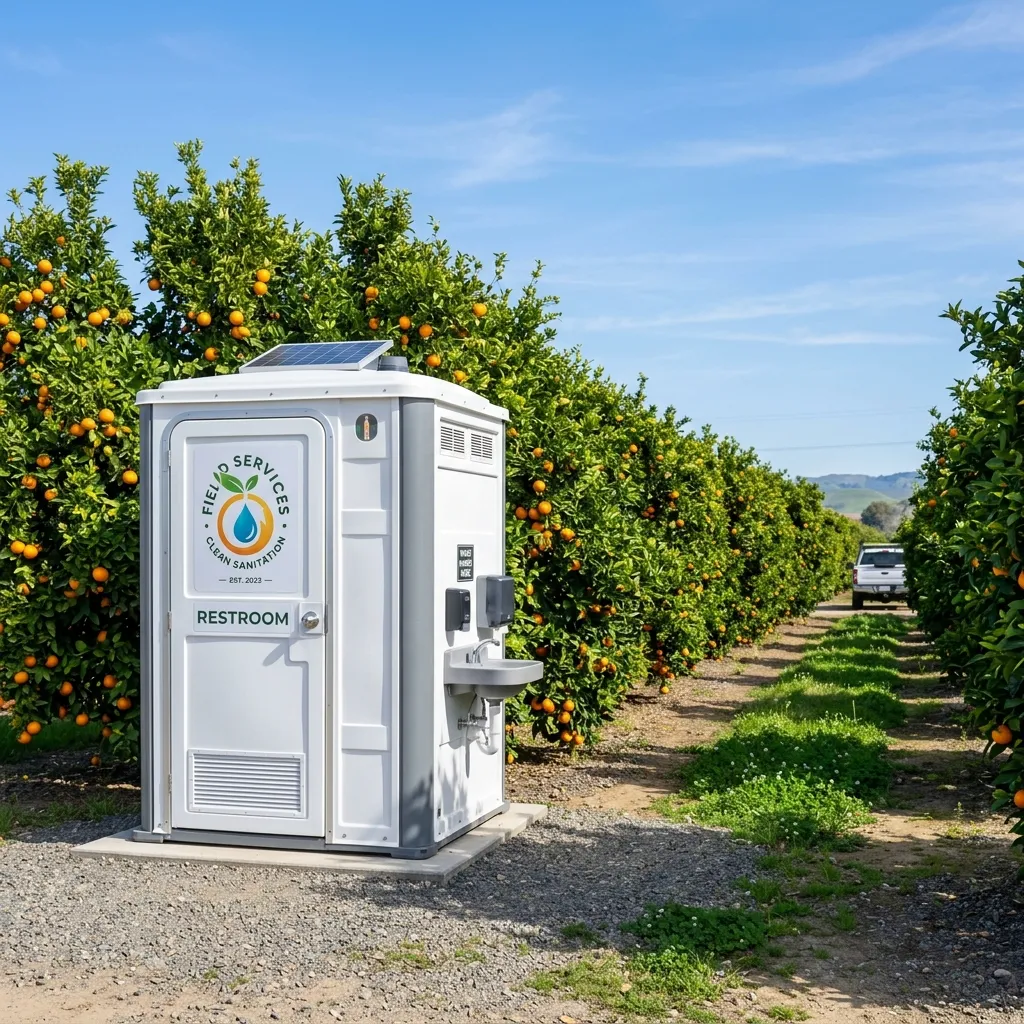
What does a farm restroom rental cost in Enid?
A standard unit runs in the range shown below, and most one-field harvest jobs land in the day or week column rather than month.
| unit | duration | typical price |
|---|---|---|
| standard | day | $150 |
| standard | week | $200 |
| standard | month | $200 |
| delivery_fee | week | $100 |
Longer harvest seasons or multi-field operations often make more sense on a monthly porta potty rental basis instead of renting week to week. If your crew works a property with rough field roads, check placement before the truck arrives. Our porta potty placement guide covers the ground clearance a service truck needs, and a full porta potty rental cost breakdown covers what pushes a quote toward the low or high end of that band. Farms near North Enid, 3.5 miles north, or Waukomis, 10.6 miles south, fall inside our standard delivery run, and Breckenridge at 12.0 miles northeast is close enough that most jobs there skip any extra trip charge. Bison, 15.8 miles south, and Hennessey, 21.9 miles south, are still workable but worth mentioning when you call so we can route the truck efficiently.
Do farm restrooms need to be ADA accessible?
Not on most working farmland, but it depends on who is on site. ADA accessibility rules generally apply where the public attends, like a farm and agricultural restrooms setup that doubles as a pumpkin patch or corn maze open to visitors. If your farm hosts a fall event, a wedding in the barn, or a 4-H function, you likely need at least one accessible unit under ADA Standards 213.2, which requires 5 percent of clustered single-user toilets to be accessible, with a minimum of one. Our ADA accessible porta potty has a wider door and interior turning space built to that standard. Pure harvest and livestock operations without public access typically do not trigger this requirement, but if you are unsure, treat any agritourism day, festival tie-in, or county fair restrooms crossover as public-facing and plan accordingly. Farms running bunkhouses for seasonal labor should also think about a deluxe flushable porta potty near housing, since crews staying on-site for weeks want something closer to a real bathroom than a basic unit. For operations pumping their own septic system for a farmhouse or bunkhouse, a typical 1,000 gallon residential tank needs pumping every 3 to 5 years depending on household size, and our septic pumping service and how often to pump a septic tank page both cover that schedule in more depth.
How far in advance should I book for wheat harvest?
Book as soon as your harvest window firms up, ideally 2 to 3 weeks out. Custom cutters moving through Enid on tight schedules should call earlier since trucks get booked solid during peak harvest. Last-minute needs still get handled through our emergency porta potty rental line.
Can you service units mid-harvest if the field location changes?
Yes. Combines move and so do we. Tell us the new field location and we reroute the service truck on your existing schedule. This is common with custom cutting crews working multiple properties around Garfield County in the same week.
What size unit works best for a labor camp?
A standard portable toilet at 44 by 48 inches on the ground with a 60 to 70 gallon tank covers most crews. Bunkhouse setups with workers on-site for weeks often add a portable sink rental or handwashing station alongside it.
Do I need a permit to place a unit on my own farmland?
Usually not on private agricultural land away from roads, but placement near a public right of way needs confirming with the city. Check our porta potty permit requirements page or call before placing anything near a county road.
Can one unit serve both a cattle operation and adjacent crop fields?
Sometimes, if the quarter-mile walk distance under OSHA 1928.110 is met from both work areas. If cattle work and field work happen more than a quarter mile apart, you need a second unit rather than one shared toilet.
Frequently asked questions
Do you deliver farm and agricultural restrooms in Enid?
Yes. Enid Porta Pros delivers farm and agricultural restrooms across Enid and the surrounding metro, with same-day and next-day drop-off available on most orders.
How much does farm and agricultural restrooms cost in Enid?
Pricing depends on the unit and how long you need it. See our cost breakdown and request a free quote for an exact figure.
How does servicing work?
Standard rentals include scheduled service — a pump-out, a clean, a restock and fresh deodorizer. Busy or hot-weather sites can be serviced more often.